What “Reasonable Steps” Really Mean in 2026: How California Employers Reduce PAGA and Employment Litigation Exposure

As California employers move through 2026, one thing is clear: employment litigation—and PAGA litigation in particular—is not slowing down.

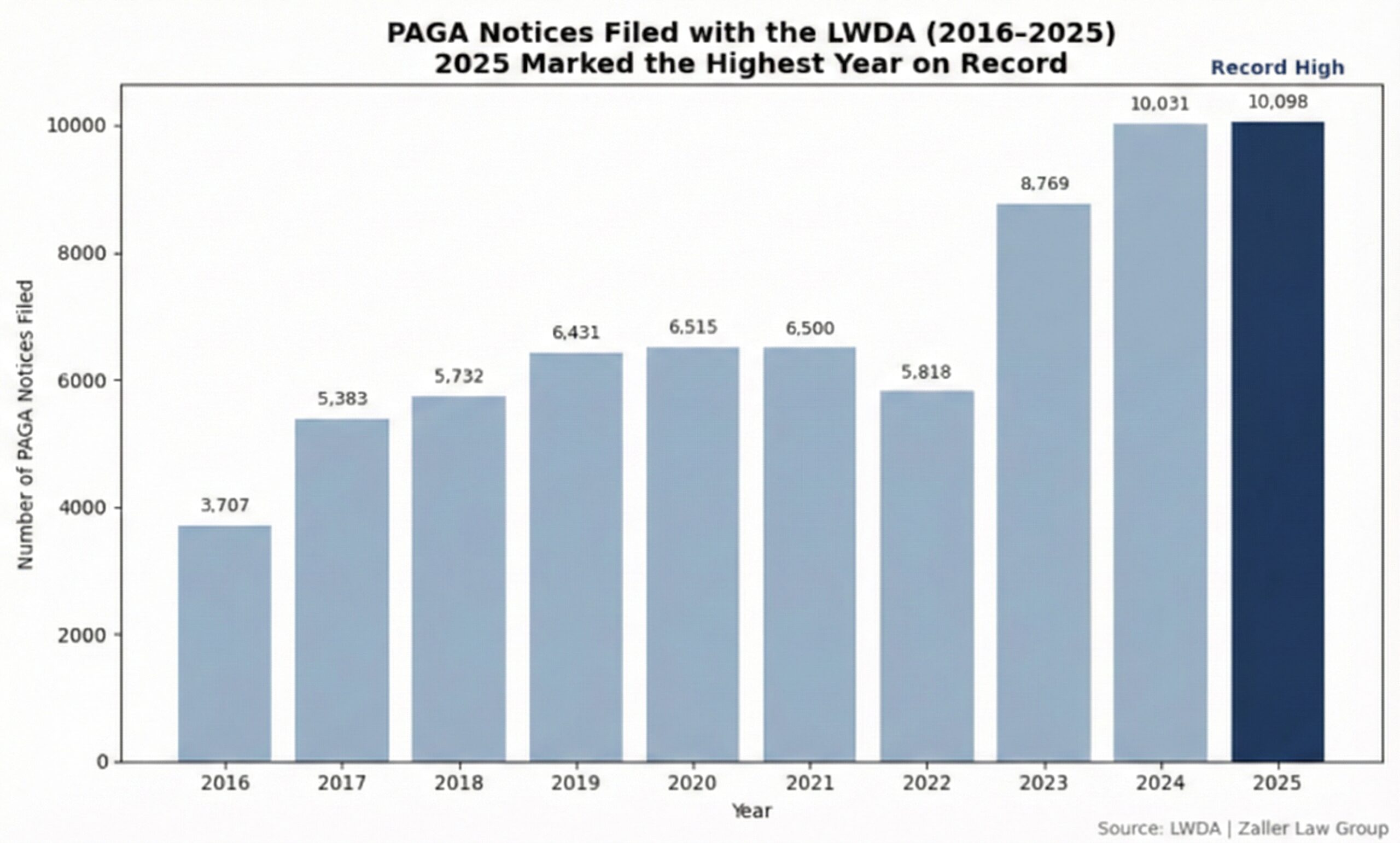
Despite the highly publicized 2024 PAGA reforms, 2025 became the largest year yet for PAGA LWDA filings. That reality has reset expectations. The reform did not reduce enforcement—it changed how employers must defend these cases.

The new dividing line is no longer simply whether a violation occurred.
It is whether the employer can prove it took all reasonable steps to comply.

While no employer can completely prevent lawsuits, California employers can significantly reduce exposure by focusing on what they can control. The following five steps focus on what can actually work in 2026 for employers that want to reduce risk, cap penalties, and maintain leverage when disputes arise.

1. Prove “Reasonable Steps” Before a PAGA Notice Is Filed

The reformed PAGA statute gives employers something they never truly had before: meaningful penalty reduction tied directly to compliance efforts.

• Employers that can prove they took reasonable steps before receiving a PAGA notice may cap penalties at 15%.
• Employers that attempt to fix issues after receiving notice face substantially higher exposure.

In practice, “reasonable steps” now require more than intent or informal reviews. Employers must be able to demonstrate a repeatable, documented compliance system.

This includes:

  • Regular wage-and-hour audits addressing meal and rest break compliance, timekeeping practices, and pay calculations
  • Written policies and handbooks that reflect current California law
  • Supervisor training with attendance records and materials preserved
  • Documented corrective action when issues are identified
  • Follow-up audits confirming that fixes were implemented

By 2026, periodic audits by experienced California employment counsel are no longer a best practice—they are increasingly the baseline for employers seeking to limit PAGA penalties.

2. Document Termination Decisions Accurately and Consistently

Termination decisions remain one of the most common triggers for employment litigation. While California law does not require a termination letter in most cases, providing one that accurately states the reason for separation is often a prudent step.

What matters most is consistency.

Plaintiff’s attorneys routinely compare termination reasons against:

  • Performance reviews
  • Internal emails and messaging platforms
  • EDD filings
  • Deposition testimony

Employers should avoid “softening” termination reasons or mischaracterizing a discharge as a layoff when performance or misconduct is the true basis. When an employer later attempts to explain that the real reason was different, it can appear as though the company is changing its story—damaging credibility at the outset of litigation.

If a termination is for cause, the documentation should say so clearly and accurately with concrete examples.

Common examples include:

  • Documented performance deficiencies
  • Policy violations
  • Insubordination
  • Dishonesty or theft
  • Harassment or discrimination
  • Excessive absenteeism or tardiness
  • Misuse of company resources

Clear, contemporaneous documentation often becomes one of the most important exhibits in early settlement discussions.

3. Use Employment Counsel as a Preventive Compliance Partner

California employment law is highly technical and unforgiving. Employers that treat employment counsel as emergency responders rather than strategic partners often incur greater legal expense over time.

In 2026, sophisticated employers integrate employment counsel into ongoing operations, including:

  • Policy and handbook updates
  • High-risk discipline and termination decisions
  • Wage-and-hour audits
  • Supervisor training
  • PAGA preparedness planning

This approach allows employers to identify and address issues early—before they become expensive class or representative actions—and often reduces total legal spend by avoiding defensive litigation altogether.

4. Invest in Knowledgeable, Empowered HR Leadership

A capable HR professional does more than administer paperwork. In 2026, HR is a critical risk-management function.

Experienced HR professionals:

  • Provide employees with a clear reporting channel for concerns
  • Conduct timely, well-documented investigations
  • Track complaints, resolutions, and corrective actions
  • Serve as a first line of defense against escalating disputes

No organization is immune from employee complaints. The question is whether issues are addressed promptly and professionally—or allowed to fester into litigation.

5. Ensure Ownership-Level Engagement and Accessibility

The most effective step for reducing employment litigation still comes from the top.

In practice, the amount of litigation an organization faces is often inversely proportional to how engaged ownership or executive leadership is with employees. Employers with strong litigation records frequently share common traits: leadership is visible, accessible, and willing to hear concerns.

When employees believe issues will be taken seriously and addressed internally, most disputes never reach a lawyer’s desk. When employees feel ignored or dismissed, litigation often becomes the mechanism they use to be heard.

In 2026, leadership engagement is not just cultural—it is strategic.

Final Thought

California employment litigation has entered a new phase. The question is no longer whether employers can achieve perfect compliance—it is whether they can prove responsible, proactive, and systematic efforts to comply.

For employers willing to invest in preparation, documentation, and leadership engagement, the reformed PAGA statute provides meaningful tools to reduce penalties and control risk. For those who do not, exposure remains as high as ever.

Preparation—not reaction—is what separates employers who manage risk from those who absorb it.
At Zaller Law Group, we do not talk about AI and technology in the abstract. We use it—every day—as a litigation tool to give our clients a measurable advantage.

California wage-and-hour and PAGA cases are data cases. Outcomes often turn on what the time records actually show, how quickly they can be analyzed, and whether counsel truly understands the data. That is why we helped design and deploy Scaled Comp, a software platform our lawyers advised on the software development to analyze large volumes of time and pay data early in a case.

Here are five ways this technology materially benefits our clients.

1. Early, Large-Scale Time Record Analysis Saves Time and Money

Wage-and-hour and PAGA cases routinely involve tens of thousands—or millions—of time entries. Traditionally, this data is not meaningfully analyzed until late in the case, often after months of motion practice, discovery disputes, and mounting legal fees.

Using Scaled Comp, we analyze large volumes of time record data early—often at the outset of litigation. This allows us to identify compliance issues (or confirm compliance) before unnecessary costs are incurred.

Early insight means fewer surprises, tighter strategy, and a more efficient defense from day one.

2. Employers Know Their Potential Exposure—and Their Best Arguments

Data clarity changes everything.

When time records are analyzed early:

  • Employers understand their realistic potential liability
  • Employers know where their strongest defense arguments exist
  • Strategy is built on facts, not assumptions

This is especially critical in mediation. Parties who understand their data negotiate from a position of strength. Parties who do not are negotiating blind.

Scaled Comp allows us to quantify issues, isolate anomalies, and explain—clearly and persuasively—the story the data actually tells.

3. Stronger “Reasonable Efforts” Arguments Under the Reformed PAGA Law

Under California’s 2024 PAGA reform, employers who can demonstrate reasonable efforts to comply may cap penalties at 15%.

Compliance rates matter. Patterns matter. Documentation matters.

By analyzing time records at scale, we can:

  • Measure compliance rates across locations and time periods
  • Identify where corrective actions were taken
  • Support reasonable efforts arguments with real data, not general statements

This is not theoretical. It is outcome-driven litigation strategy tied directly to reduced penalty exposure.

4. Lawyers Must Control—and Understand—the Data

Too often, law firms outsource data analysis to third-parties who run numbers in isolation and deliver a report weeks or months later. That approach creates three problems:

  1. Lawyers lose control of the data
  2. Lawyers do not fully understand the analysis
  3. Strategy becomes dependent on someone outside the litigation team

At Zaller Law Group, Scaled Comp provides both the report and the underlying data for our attorneys to use and fully understand. This allows our lawyers to dispute differences between data sets in real time—an enormous advantage during negotiations and mediation.

Because Scaled Comp is used in-house:

  • We control the data
  • We understand the assumptions
  • We can run real-time analysis during mediation or calls with a mediator

Your lawyer should be fluent in your records—not waiting on someone else to explain them.

5. Faster Insight Leads to Earlier Resolution—and Better Outcomes

Delays are expensive.

The longer it takes to analyze data, schedule mediation, and meaningfully evaluate exposure, the longer a case lingers, the longer the recovery period continues, and the higher the settlement risk becomes. Prolonged litigation increases legal spend, business disruption, and uncertainty.

By front-loading data analysis:

  • Cases are positioned for earlier mediation
  • Resolution happens earlier—not a year or more after filing
  • Employers reduce total litigation cost and recovery period

Clients are better served by efficient resolution—not prolonged process.

Final Thought: AI Is No Longer Optional

This is no longer a debate about whether AI and technology belong in legal practice.

They are here.

Law firms that are not using technology to analyze data at scale are already behind opposing counsel—and are not delivering the strongest possible defense to their clients. Lawyers need to wake up to that reality.

At Zaller Law Group, we use technology strategically, responsibly, and aggressively to protect employers operating in California’s most challenging legal environment.

That is not the future of employment defense.
It is the present.

To learn more about Scaled Comp and how it is used to analyze time and pay data in wage-and-hour and PAGA matters, feel free to contact me or visit www.scaledcomp.com.

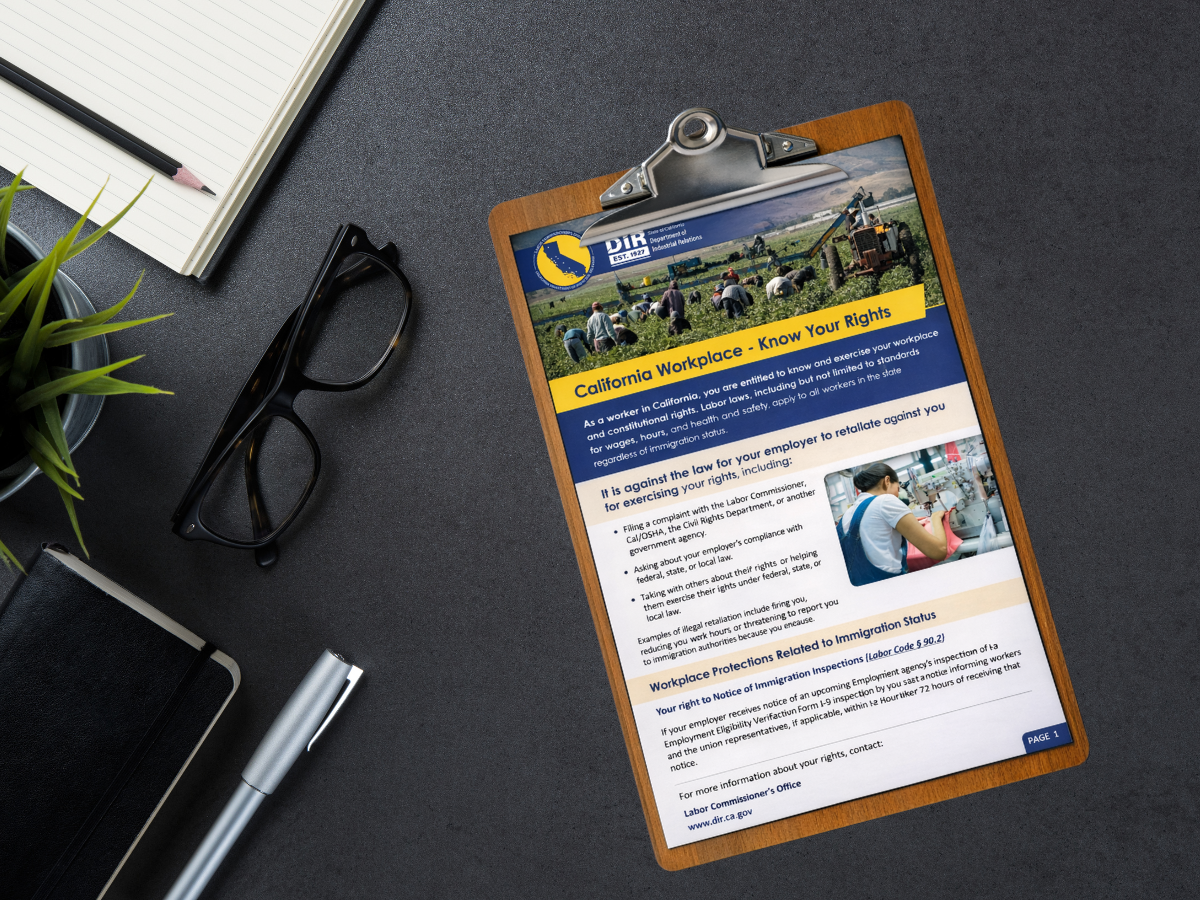
The California Labor Commissioner published the official “California Workplace – Know Your Rights” notice (available here in English and Spanish) required under the Workplace Know Your Rights Act (SB 294).

The first mandatory distribution date is February 1, 2026.

Here are five things every California employer should understand now.

1. Distribution Rules Are Specific

Beginning February 1, 2026, employers must provide the notice:

  • To all current California employees by February 1, 2026;
  • To new hires at the time of hire; and
  • To union representatives, where applicable.

Delivery must be made using the employer’s normal communication method—including personal delivery, email, or text message—so long as receipt can reasonably be expected within one business day.

2. Recordkeeping Requirements: Keep Proof For Three Years

Employers must keep proof of notice delivery for at least three years. This proof can include:

  • Signed acknowledgment forms
  • Digital read receipts or confirmation emails
  • HR system logs

Strong documentation will be key if the Labor Commissioner or another enforcement agency requests verification.

For California HR teams, this is a good time to audit your employee recordkeeping process and ensure that all required workplace postings and notices are organized in one place.

3. New Educational Videos and Employer Resources

The Labor Commissioner’s Office will also release two educational videos by July 1, 2026:

  1. A video for employees explaining their workplace rights.
  2. A video for employers outlining compliance requirements and constitutional protections.

Employers should plan to include these videos in onboarding, annual training, or even all-hands compliance refreshers to demonstrate good-faith efforts at compliance.

For updates on when these materials become available, make sure you are subscribed to receive updates at California Employment Law Report.

4. Emergency Contact Obligations Are a Separate Compliance Deadline

SB 294 also imposes a new requirement effective March 30, 2026.

By that date, employers must allow employees to:

  • Designate or update an emergency contact; and
  • Indicate whether that contact should be notified if the employee is arrested or detained.

If an employee makes that request, the employer must notify the emergency contact when the employee is arrested or detained:

  • At the workplace; or
  • During work hours or job duties (even off-site), if the employer has actual knowledge.

This requirement will require updated forms, onboarding processes, and HR training.

5. Penalties Are Real—and Layered on Top of Other Exposure

Failure to comply with SB 294 can result in civil penalties of:

  • Up to $500 per employee per day for emergency contact violations; and
  • Up to $500 per employee per violation for notice-related failures.

Bottom Line for Employers

Now is the time for employers to:

  • Audit communication systems for reliable, trackable distribution;
  • Update onboarding documents (we generally recommend standard new hire packets);
  • Prepare emergency contact procedures ahead of March 30, 2026;
  • Train managers and HR teams on how these rights apply in practice; and
  • Calendar February 1, 2026 as a firm compliance deadline.

California continues to raise the bar on employer documentation and transparency. Employers who prepare early will be best positioned to demonstrate good-faith compliance—and reduce litigation risk—when enforcement begins.

As California employers enter 2026, one thing is clear: PAGA risk is not going away—and it is not plateauing.

The numbers tell the story. Despite the highly publicized 2024 PAGA reforms, 2025 became the largest year yet for PAGA filings. That reality should reset expectations for California employers. Reform did not reduce filings—it changed how employers must defend them.

The new dividing line is no longer simply whether a violation occurred.
It is whether the employer can prove it took “all reasonable steps” to comply.

The 2026 Reality: PAGA Reform Rewards Preparation, Not Intent

The reformed PAGA statute gives employers something they never truly had before: meaningful penalty reduction for demonstrated compliance efforts.

  • Employers that took reasonable steps before receiving a PAGA notice may cap penalties at 15%.
  • Employers that take reasonable steps within 60 days after receiving a notice may cap penalties at 30%.

But these caps are not automatic. Courts evaluate reasonableness under the totality of the circumstances, considering:

  • employer size and resources,
  • the nature, severity, and duration of the alleged violations, and
  • whether systems existed to prevent, detect, and correct issues.

Critically, the statute also recognizes that violations can occur even when reasonable steps are taken. That language matters—but only if employers can prove those steps with evidence.

“Reasonable Steps” Is Not a Checkbox—It’s an Evidence Standard

The statute makes clear that courts must evaluate reasonableness based on the totality of the circumstances, including:

  • the size and resources of the employer,
  • the nature, severity, and duration of the alleged violations, and
  • whether the employer made good-faith efforts to comply.

Importantly, the law also states that the mere existence of a violation does not mean the employer failed to take reasonable steps. That language is critical. It recognizes that even compliant employers can experience errors—and shifts the focus to whether the employer had systems in place to prevent, detect, and correct problems.

What “Reasonable Steps” Must Look Like in 2026

As we start 2026, employers should think of reasonable steps as an operating system, not a compliance memo. Below is what that system should include.

1. Conduct Periodic Payroll and Wage-Hour Audits—and Act on the Results

Audits alone are not enough. What matters is what the employer does after issues are identified.

Strong examples include:

  • Regular wage-hour audits focused on high-risk areas such as meal and rest periods, off-the-clock work, time rounding, regular rate calculations, premiums, and expense reimbursements.
  • Exception reporting that flags patterns (missed meals, late meal breaks, frequent time edits) before they become systemic.
  • A documented remediation process showing when issues were found, how they were corrected, and how recurrence was prevented.

From a PAGA perspective, an audit without documented corrective action is weak evidence. An audit paired with a remediation trail is powerful.

2. Maintain Lawful, Up-to-Date Written Policies—and Actually Use Them

Written policies matter, but only if they are current, distributed, and aligned with how the business operates.

Reasonable steps include:

  • Wage-hour policies that clearly address timekeeping, meal and rest periods, premium pay, time edits, off-the-clock prohibitions, and reimbursements.
  • Version control showing when policies were updated and why.
  • Proof of dissemination—signed acknowledgments or digital confirmations.
  • Integration of policies into onboarding and manager guidance, not just an employee handbook that sits on a shelf.

Courts and agencies look skeptically at policies that exist on paper but are ignored in practice.

3. Train Supervisors on Wage-Hour Compliance

Many PAGA claims are driven by front-line management behavior, not by payroll or back office managers. Training supervisors is a core component of the reasonable-steps analysis.

Effective training includes:

  • Role-specific instruction for managers who schedule employees, approve time, or make payroll adjustments.
  • Training on meal and rest period timing, time edits, off-the-clock risks, and premium pay.
  • Documentation of attendance, materials used, and follow-up training when issues arise.

Training that is documented and refreshed over time carries significantly more weight than a one-time presentation years earlier.

4. Take Corrective Action When Supervisors Cause Violations

Reasonable steps also require accountability.

When audits, complaints, or data show that supervisors are contributing to violations, employers should be able to show:

  • Coaching and retraining efforts,
  • Escalating discipline where appropriate,
  • Removal or limitation of time-edit authority for repeat offenders, and
  • Compliance metrics built into management performance expectations.

This is often decisive in countering claims that violations are “systemic” or “intentional.”

5. Respond Strategically Within 60 Days of a PAGA Notice

For employers who did not already have these systems in place, the reform still provides an opportunity. Employers who take reasonable steps within 60 days after receiving a PAGA notice may still qualify for a reduced penalty cap.

A disciplined 60-day response typically includes:

  • Immediate preservation and review of records tied to the alleged violations,
  • A focused audit of affected locations, job classifications, and time periods,
  • Prompt correction of payroll or scheduling practices,
  • Targeted policy updates and supervisor retraining, and
  • A clean documentation package showing what changed and when.

This window is short—and preparation before a notice is received dramatically improves outcomes.

The Takeaway for California Employers

The 2024 PAGA reforms reward employers who invest in process, documentation, and accountability. The question is no longer simply whether a violation occurred. It is whether the employer can show it acted reasonably before and after issues arose.

Employers who build their compliance systems now will be in a far stronger position when—not if—a PAGA notice arrives.

At Zaller Law Group, we help California employers build and document PAGA-ready compliance systems designed to meet the “reasonable steps” standard. If you want to reduce PAGA exposure and take advantage of the new penalty caps, now is the time to act.

Happy Holidays! As we close out 2025, I’m reflecting on an incredible year at Zaller Law Group. This year brought both challenges and opportunities for California employers—from navigating new 2026 legislation to managing the ongoing wave of PAGA litigation, to embracing AI tools that are transforming how businesses operate.

Despite the complexity of California’s regulatory environment, our team at ZLG remained committed to one mission: educating, convening, and supporting California employers through every twist and turn. Here’s a look back at how we showed up for you in 2025:

1. 14 Masterclasses with Over 3,000 Participants

In 2025, we expanded our educational programming significantly. These sessions covered everything from PAGA reform strategies to AI compliance in hiring, giving employers actionable insights they could implement immediately. As a State Bar of California-approved multi-activity provider, many of our masterclasses were eligible for MCLE credit for attending attorneys. We also offered SHRM credit for HR professionals in attendance. If you would like to receive notice of our upcoming Masterclasses in 2026 – subscribe to our newsletter below.

2. Four Invitation-Only Employers Summit Events with 100+ Attendees

We hosted four exclusive, in-person events throughout the year at premier venues (and client locations) including Gran Blanco, TopGolf, American Beauty, and Castaway. These summits brought together over 100 California employers, CEOs, HR leaders, and in-house counsel for live education, networking, and candid discussions about the challenges facing California businesses today. The feedback was overwhelmingly positive, and we’re already planning our 2026 summit series.

3. Monthly Newsletter Reaching 9,000+ Subscribers

Our monthly newsletter continued to be a vital resource for staying current on California employment law updates, litigation trends, curated resources and videos, and details on upcoming events like our Employers Summit. With over 9,000 subscribers, this newsletter has become a trusted source for employers across industries who need reliable, timely information.

4. 52 Weekly Blog Posts Read by 8,000+ Subscribers

Since 2007, I’ve published weekly Friday posts offering practical guidance on California employment law developments, litigation trends, and compliance challenges employers face. This year, our blog reached 8,000+ readers who rely on these posts to stay ahead of regulatory changes and emerging legal issues. We are also proud to see many other defense attorneys subscribing to the blog—we are honored to be trusted by so many people to keep up-to-date with California employment law developments and thought leadership. Subscribe to the blog here.

5. YouTube Channel: 3,000+ Subscribers, 88,000+ Views, 770,000+ Impressions

Our YouTube channel, “The Legal Lineup,” saw tremendous growth in 2025. We shared insights from masterclasses, live events, and interviews with industry leaders, reaching over 3,000 subscribers. The channel generated 88,000+ views and 770,000+ impressions, making it an increasingly valuable resource for California business leaders seeking accessible legal education. Subscribe to the channel here.

And one more for 2025: New Office Space!

We’re excited to share that we relocated to our own space at 721 N Douglas Street, El Segundo, CA 90245. This move reflects our continued growth and commitment to serving California employers from a dedicated, professional environment. When looking for an office, it was an easy decision to stay in El Segundo. We are honored to be a part of the amazing business ecosystem developing here in El Segundo.

The work described above reflects the dedication of our entire team at Zaller Law Group—attorneys, paralegals, and staff who work tirelessly not only to defend employers in litigation but also to proactively educate and empower them to avoid legal pitfalls in the first place.

Thank you to our clients, partners, and community for an impactful year. Wishing everyone a prosperous and compliant 2026—we’ll see you at our next summit!

If you’re not already subscribed to our blog or newsletter, now’s the perfect time: Subscribe here

For most California employers, employee time and pay data has historically been treated as a legal obligation—something you keep because the law requires it, not because it creates value.

That mindset needs to change in 2026.

After years of defending employers in wage-and-hour class actions and PAGA cases, I have seen firsthand how employee data can either become an employer’s greatest liability or its strongest asset. The difference is no longer about company size or resources—it is about whether employers are using modern tools, including AI, to unlock the value of the data they already have.

Here are five reasons why this shift matters now more than ever.

1. Litigation Exposed Just How Broken the Old System Was

One of the primary reasons I became involved with Scaled Comp is simple: I saw how broken—and inefficient—the old approach was.

When employers were sued, we often had to:

  • Manually review thousands of PDF timecards
  • Reconstruct meal and rest break data by hand
  • Calculate exposure using spreadsheets built from incomplete records
  • Or, in some cases, physically go through boxes of paper records and scan them just to create a usable digital file

This process was painfully slow, extraordinarily expensive, and created unnecessary risk. By the time data was analyzed, employers were already on their back foot—reacting instead of defending.

What struck me most was that this kind of analysis should not be reserved only for companies with massive IT teams and unlimited budgets. Every employer deserves access to tools that make compliance manageable and defensible.

2. AI Has Turned Employee Data Into a Strategic Asset

AI has fundamentally changed what is possible.

What once took teams of lawyers, paralegals, and weeks of manual work can now be done in hours. AI-driven platforms can:

  • Continuously analyze time entries
  • Identify compliance risks in real time
  • Generate clear, defensible reports
  • Highlight trends and outliers across locations or job roles

In 2026, employee data is no longer static. With AI, it becomes dynamic, actionable, and predictive—allowing employers to address problems before they become lawsuits.

This is not just about avoiding liability. It is about understanding how your business actually operates day to day.

3. Data Is the Key to the “Reasonable Efforts” Defense Under PAGA

The 2024 PAGA reforms changed the calculus for employers—but only if they can prove it.

Employers who can demonstrate reasonable efforts to comply with wage-and-hour laws may limit penalties to 15% of the total potential exposure. That defense does not come from good intentions; it comes from documented, ongoing data analysis.

Employers using software like Scaled Comp can show:

  • Continuous monitoring of compliance
  • Identification of risk areas
  • Corrective actions taken based on real data

In other words, AI-powered data analysis turns compliance from a one-time audit into an ongoing process—exactly what the law now rewards.

4. The Same Data That Protects You Legally Helps You Run a Better Business

Another major shift employers must recognize is that this data is not just for lawyers.

When properly analyzed, employee time data allows employers to:

  • Evaluate labor efficiency in real time
  • Improve scheduling decisions
  • Identify timecard fraud or ghost employees
  • Spot systemic issues tied to specific managers, locations, or shifts

AI makes it possible to move from hindsight to insight. Employers can use historical data to fix recurring problems and real-time data to prevent new ones from developing.

Compliance and efficiency are no longer separate conversations—they are driven by the same dataset.

5. Compliance Is Mandatory—But Value Comes From How You Use the Data

California law requires employers to maintain detailed time records.

The Wage Orders mandate records showing when employees begin and end work, meal periods, split shifts, and total daily hours worked. Labor Code section 1174 requires employers to keep records of hours worked and wages paid. And because wage-and-hour claims can reach back four years, employers must be able to produce accurate, readable records long after the fact.

The mistake employers make is stopping there.

In 2026, compliance is the floor—not the ceiling. The employers who succeed will be those who ensure their records are not only compliant, but usable, searchable, and defensible.

Final Thought

Employee data used to be a necessary burden. In 2026, it is a competitive advantage.

AI has made sophisticated analysis accessible to employers of all sizes. The question is no longer whether you can use your data—it is whether you are willing to continue treating it as a liability instead of the asset it has become.

That shift in mindset is exactly why tools like Scaled Comp exist—and why employers who embrace this approach will be far better protected, better informed, and better positioned for what comes next.

After more than twenty years defending California employers, I have seen a consistent pattern: even companies with sophisticated systems struggle with one of the most fundamental compliance obligations in California employment law—maintaining, accessing, and analyzing employee time records. These challenges are not merely operational inconveniences. They routinely lead to unnecessary legal exposure, inflated PAGA penalties, and missed opportunities to extract meaningful business insights. Scaled Comp was built to solve these exact problems.

Here are the five reasons I founded Scaled Comp:

1. Employers were struggling just to keep and store basic time records.
California law requires employers to maintain accurate employee time and payroll records, yet many organizations still rely on systems that scatter data across PDFs, screenshots, or outdated exports. Time records were difficult to store in an organized manner, hard to preserve over time, and even harder to retrieve years later—particularly when litigation arose. What should have been a basic compliance function was becoming a persistent liability.

2. Accessing time records during litigation or audits was far more difficult than it should be.
When a claim was filed, employers were often scrambling: Where are the records? Are they complete? Are they readable? Too often, the answer was no. I watched clients spend weeks hunting down files, reconstructing data, and manually preparing materials just to respond to a lawsuit or a PAGA notice. This was especially true when employers had changed payroll providers; obtaining historical time data from former providers was often difficult, if not impossible. The result was increased risk, higher legal fees, and unnecessary stress.

3. Even when records were available, they were nearly impossible to analyze at scale.
Time records are one of the most critical data sets an employer possesses, yet most companies cannot run even a basic compliance-rate analysis without significant manual effort. Determining whether employees took compliant meal or rest breaks, identifying missed premiums, or estimating potential exposure often required hours of spreadsheet work and hand-coding. The lack of clean, structured data prevented employers from proactively managing risk—and in litigation, it slowed defense strategies and drove up costs.

4. Clean, analyzable time records are essential to reducing PAGA penalties—and unlocking operational insights.
Under California’s 2024 PAGA reforms, employers that can demonstrate reasonable and consistent efforts to comply with wage-and-hour obligations may reduce penalties to as low as 15 percent. But compliance cannot be proven without reliable, well-organized time data. Centralizing and structuring time records allows employers to demonstrate good-faith compliance, quantify true exposure, and negotiate from a position of strength.
Beyond compliance, structured time data reveals valuable operational insights, including manager performance trends, scheduling efficiency, productivity patterns, and workforce behaviors that would otherwise remain hidden.

5. With AI-ready time data, employers can finally use information strategically—not just defensively.
Once time and payroll data is standardized and loaded into an AI-driven platform, employers can begin asking more sophisticated questions:

  • Can we predict labor needs weeks in advance?
  • What happens to labor costs under different scheduling scenarios?
  • Can we identify early indicators of compliance risk before claims arise?
  • What insights exist that we have not yet considered?

This is the future of workforce management—moving from reactive to predictive, from manual cleanup to automated intelligence, and from fragmented systems to accessible, actionable data.

Scaled Comp was founded to address a problem I encountered daily: employers already had the data they needed to protect themselves and improve operations, but that data was locked in formats that made it difficult—or impossible—to use. By transforming time records into clean, structured, AI-ready data, employers gain a powerful compliance tool, a litigation shield, and a new source of operational insight.

We have been working with a select group of clients and recently completed our beta phase. The feedback has been extremely positive. In addition, the platform has enabled my legal team to analyze client records more quickly, efficiently, and comprehensively—resulting in stronger assessments of legal defenses and litigation strategy.

If you would like help evaluating whether your current timekeeping data is litigation-ready or AI-ready, visit Scaled Comp’s website or I am always happy to discuss, you can sign up for a call here.

As we approach 2026, California employers face a new round of legal and financial adjustments that will directly impact payroll budgeting, exempt classifications, and compliance risk. From statewide wage increases to industry-specific salary thresholds, these updates require careful planning to avoid misclassification claims, PAGA exposure, and penalties.

Here are the top five increases California employers must prepare for in 2026 — and what you should be doing now.

1. California’s Minimum Wage Increases

Effective January 1, 2026, California’s minimum wage increases to $16.90 per hour for all employers, regardless of size.

Remember:

  • Many cities and counties — including San Francisco, Los Angeles, West Hollywood, Santa Monica, Emeryville, and Oakland — have higher local minimum wage rates.
  • Employers must always pay the highest applicable wage, even if employees work remotely or split time across jurisdictions.

Employer Action Item:
Map your workforce locations now and confirm which local ordinances apply. Multi-location employers are particularly vulnerable to accidental underpayments.

2. Increased Minimum Salary for Exempt Employees

California’s exemptions require employees to meet both the duties test and the salary basis test. Because the salary test is tied to the state minimum wage, it will rise in 2026.

Beginning January 1, 2026, the minimum salary for the white-collar exemptions (executive, administrative, professional) increases to:

  • $70,304 annually (up from $68,640 in 2025)

Fast-food employers covered by AB 1228 have a higher threshold (see Item 3).

Employer Action Item:
Audit your exempt employee salaries before the end of the year. Even a small shortfall can invalidate the exemption and trigger unpaid overtime claims going back four years — often accompanied by PAGA penalties.

3. Fast Food Industry: Minimum Wage & Exempt Salary Threshold Updates

Fast food employers covered by AB 1228 must continue monitoring industry-specific wage rules:

  • The $20 per hour minimum wage took effect April 1, 2024.
  • The Fast Food Council may increase this rate annually based on inflation and economic factors. While the Council did not increase wages for 2025, employers should be prepared for changes as we move into 2026.

Exempt Salary Threshold for Fast Food Employers:
To classify an employee as exempt, covered employers must pay a minimum annual salary of:

  • $83,200 per year

This figure is tied directly to the fast-food minimum wage. If the hourly rate increases, the exempt salary threshold will rise automatically.

Employer Action Item:
Document all positions that may be affected and prepare alternative staffing or scheduling plans in the event of a 2026 rate increase.

4. Adjusted Salary Thresholds for Computer Software Professionals

Under Labor Code section 515.5, certain computer professionals may be exempt from overtime if they meet strict duties and salary requirements.

For 2026 (effective January 1):

  • Hourly rate: $58.85 (up from $56.97 in 2025)
  • Monthly salary: $10,214.44 (up from $9,888.13 in 2025)
  • Annual salary: $122,573.13 (up from $118,657.43 in 2025)

Employer Action Item:
Review all engineering, software development, and IT roles to ensure they still meet both the duties test and the new salary thresholds. This exemption is frequently misapplied — and commonly targeted in PAGA actions.

5. Updated IRS Mileage Reimbursement Rates

The IRS adjusts its standard mileage rates annually. While the 2026 rates have not yet been announced, employers should monitor the update closely.

As a reminder, the 2025 mileage rates are:

  • 70 cents per mile for business-related travel
  • 21 cents per mile for qualified medical or moving purposes
  • 14 cents per mile for charitable organizations (unchanged)

Mileage reimbursement is required under California law to ensure employees are fully indemnified for work-related expenses.

Employer Action Item:
Confirm your travel reimbursement policy automatically updates to the new IRS rate each year, and train managers not to approve outdated reimbursement amounts.

Final Takeaway These changes require proactive planning — not last-minute adjustments. Wage increases and salary threshold changes are among the most common sources of wage-and-hour disputes, and compliance now can help avoid litigation later.

As we move toward 2026, California employers—especially in hospitality—are navigating one of the most complex wage-and-hour landscapes in the country. The 2024 PAGA reform brought meaningful relief, but only for employers who take their compliance obligations seriously and can prove it.

At the same time, technology and AI are beginning to transform what compliance looks like. Our firm has been developing an AI-powered compliance platform designed specifically for California wage-and-hour rules, and early feedback from the first companies using it has been extremely positive. More on that below.

For now, here are the five compliance priorities every employer should be focused on as we head into the new year:

1. PAGA Reform Only Helps Employers Who Can Prove Compliance

The 2024 PAGA reform allows employers to dramatically reduce potential penalties—down to 15% of what plaintiffs could otherwise seek. But this benefit is not automatic.

To qualify, employers must show they took meaningful “reasonable steps,” including:

  • Regular payroll and timekeeping audits
  • Updated policies and employee handbooks
  • Supervisor training
  • Prompt corrective action

Documentation is now everything.
If it’s not documented, it didn’t happen.

2. PAGA Filings Are Still at Record Levels

Many assumed PAGA lawsuits would drop after the reform. They didn’t.

In fact:

  • 2024 saw the highest number of PAGA filings in history
  • 2025 is tracking at nearly identical levels
  • A handful of plaintiff firms now file over 25% of all PAGA cases statewide

High-volume plaintiff firms are moving quickly, and state enforcement remains aggressive.
Reform changed the rules—but it did not reduce the risk.

3. Routine Payroll & Timekeeping Audits Are Your Strongest Protection

Meal and rest periods, accurate timekeeping, paystub formatting, overtime calculations, split-shift rules, and off-the-clock issues continue to drive the majority of wage-and-hour claims.

The best defense entering 2026 is a recurring audit process, ideally quarterly. These audits should review:

  • Meal and rest break compliance
  • Paystub formatting (Labor Code § 226)
  • Overtime and double-time calculations
  • Local and state minimum wage updates
  • Timecard edits, patterns, and approvals

When a PAGA notice arrives proving compliance will be critical.

If you don’t have that documentation, you lose access to the 15% penalty cap.

We’ve created a simple model employers can use to set up their own audit process—a 5-step, 30-minute payroll audit. Download it here.

4. Supervisor Training Is Now Essential—Not Optional

To qualify for reduced PAGA penalties, employers must show that supervisors were trained on wage-and-hour compliance.

Effective training must cover:

  • Scheduling legally compliant meal and rest periods
  • How to handle late, short, or missed breaks
  • Preventing off-the-clock work
  • Overtime rules
  • Documentation and communication requirements

Employers should maintain records of:

  • Attendance
  • Training length
  • Topics covered
  • Learning management system completions or signed acknowledgments

A well-trained supervisor can prevent more violations than any policy manual.

5. AI Will Transform Compliance in 2026—and We’re Building the Tools

One of the most important developments heading into 2026 is the arrival of AI-driven wage-and-hour compliance software.

Our firm has partnered with a developer to build a platform specifically for California employers that can:

  • Analyze thousands of time records in minutes
  • Detect missed, short, or late breaks
  • Identify missing premiums
  • Flag potential violations or patterns
  • Run automated payroll audits
  • Produce summaries employers can use as evidence of “reasonable steps”

Several employers are already using early versions of the software, and the feedback has been extremely encouraging. Many report that it provides compliance visibility they could never realistically achieve on their own.

If you’d like to join the waitlist for early access, sign up here.

Final Thoughts for 2026

California’s regulatory environment isn’t getting simpler—but employers have more tools than ever to protect themselves. Heading into 2026, success depends on:

  • Staying current on wage-and-hour requirements
  • Building consistent systems—not one-off fixes
  • Documenting every compliance effort
  • Training supervisors thoroughly
  • Leveraging technology and AI to stay ahead of violations

If you’d like help conducting a privileged wage-and-hour audit, strengthening your compliance systems, or training your managers before the new year, my team and I are here to support you.

As the holiday season approaches, it’s a perfect time for California employers to revisit their policies on holiday leave, scheduling, and pay practices. Last week, we covered key vacation considerations for the busy season. This week, we’re focusing on five important reminders to help ensure compliance and smooth operations as the year winds down.

1. Holiday Time Off Is Not Required Under California Law

California employers are not legally required to give employees time off for holidays, unless the request relates to a sincerely held religious belief (covered below). As the DLSE explains:

“Hours worked on holidays, Saturdays, and Sundays are treated like hours worked on any other day of the week. California law does not require employers to provide paid holidays, close their business on holidays, or give employees time off for specific holidays.”

That said, consistent application of company policies is essential, especially in 24/7 operations like restaurants, hospitality, and healthcare.

2. No Requirement for Paid Holidays or Premium Pay for Holiday Work

Employers do not need to pay employees for holidays they do not work, nor is extra pay required for hours worked on a holiday. While employers may voluntarily offer “holiday pay” or premium pay, these benefits must be clearly defined in handbooks or written policies.

Legislative attempts such as the “Double Pay on the Holiday Act of 2016” have occasionally surfaced, but none have passed. Still, given California’s active legislative climate, employers should monitor for future proposals impacting holiday pay.

3. Religious Holiday Observances Require Reasonable Accommodation

Employers must provide reasonable accommodations to employees who cannot work on certain holidays due to religious observances. This may include schedule adjustments, shift swaps, or allowing use of accrued time off. As with all accommodation issues, the analysis is fact-specific and requires an individualized assessment.

For industries that regularly operate on holidays—restaurants, retail, hospitality—employers should clearly communicate scheduling expectations in advance and ensure managers understand the accommodation process.

4. Paid Holiday Benefits Do Not Accrue Like Vacation

If an employer offers paid holidays, employees do not accrue this benefit like vacation, and unused holiday pay does not need to be paid out at separation. Employers should be explicit that holiday pay is contingent on being employed on the holiday itself.

Many employers also implement eligibility rules—such as requiring employees to work their scheduled shift immediately before and after the holiday. These rules must be applied consistently and should be clearly stated to avoid claims of unfair treatment.

5. Payroll Timing May Shift When Holidays Fall on Payday

If a holiday falls on a regular payday and the business is closed, the employer may process wages on the next business day. Employers should confirm that payroll schedules comply with the DLSE’s requirements and review the list of holidays recognized under California Government Code Section 6700, including:

  • New Year’s Day
  • Martin Luther King Jr. Day
  • Memorial Day
  • Independence Day
  • Veterans Day
  • Christmas Day

Additional holidays—such as Admission Day (September 9) and Native American Day (fourth Friday in September)—are also included in the Code.

Employers should review their payroll vendor’s holiday schedule now to avoid surprises and ensure timely, compliant wage payments.

Wishing you a productive and successful holiday season! With clear policies and proactive communication, employers can reduce risk, maintain compliance, and support employees during one of the busiest times of the year.